Paver Sealing Jacksonville, FL
Florida loves pavers. Driveways, pool decks, patios, and walkways all over Jacksonville are paved with brick pavers - they look great and handle our sandy soil better than poured concrete. But pavers have a weak point: the sand joints between them. Jacksonville's heavy rains wash that sand out, weeds root in the gaps, and ant hills pop up along the edges. Left alone, pavers shift, stain, and fade.
Paver sealing fixes all of that in one process. We deep-clean the pavers, re-sand the joints with fresh sand, and apply a quality sealant that locks the sand in place, blocks weeds and ant hills, resists oil and rust stains, and brings back the pavers' original color. For pool decks, we use sealants with grip additives so the surface stays safe under wet feet - a real concern, because algae on an unsealed pool deck is a genuine slip hazard.
We will be upfront: paver sealing costs more than a simple cleaning. It is a multi-step, high-value service, and it should be priced like one. What you get is years of protection instead of months of cleanliness. Call (904) 555-0134 for free quotes and an honest assessment of your pavers.
Free quote
Get a Free Quote Today
Call now — tell us what needs washing and get a firm, no-obligation price.
📞 Call +1 (904) 555-0134Free quotes · No obligation · Serving Jacksonville & the First Coast
Jacksonville, FL
Why Jacksonville Pavers Need Sealing
Unsealed pavers in Northeast Florida face a specific set of enemies. Summer downpours and hurricane-season rains erode the joint sand a little with every storm - you can watch it washing out along the driveway edges. Once the joints open up, weeds move in fast in this climate, and fire ants love building mounds in the loose sand along paver borders.
Then there is the fading. Florida's UV bleaches the color out of unsealed pavers year by year, turning rich reds and browns into a washed-out pink-gray. Oil drips soak straight into unsealed pavers and become permanent. And around pools, the constant moisture grows algae in the joints that makes the deck slick. Sealing addresses every one of these problems at once, which is why it is the standard recommendation for Florida paver installations - not an upsell, just how pavers are meant to be maintained here.
The process
Our Process: Deep Clean, Re-Sand, Seal
Sealing over dirty pavers would just trap the grime underneath, so the process starts with a thorough cleaning and every step matters.
Step 1: Deep clean
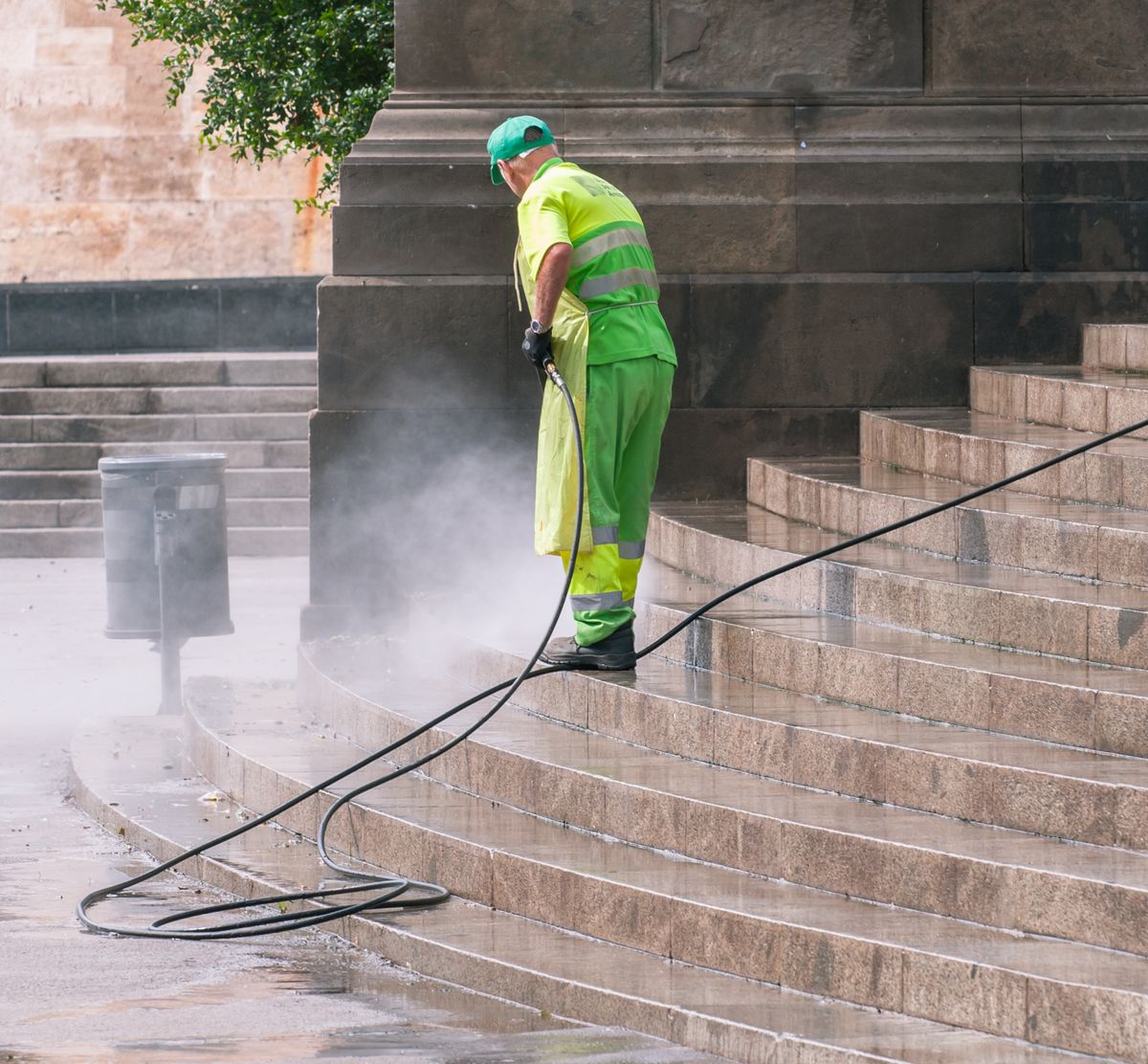
We pressure wash the pavers at controlled pressure - enough to remove years of grime, algae, and old failed sealer, but not so much that we blast out all the joint sand prematurely. Stubborn oil spots and rust stains get pre-treated. For pavers with heavy weed growth, we remove the weeds and their roots from the joints.
Step 2: Re-sand the joints
Once the pavers are clean and dry, we sweep fresh joint sand into every gap and compact it down. This replaces the sand that years of rain washed away and gives the sealant something solid to lock in. Skipping this step is the most common shortcut in cheap sealing jobs - without fresh sand, the sealer has nothing to bind.
Step 3: Seal
We apply the sealant in even coats with professional spray equipment, working it into the joints as well as the paver faces. Around pools, we add a grip additive for slip resistance. The sealer soaks in, hardens the joint sand into a firm, weed-resistant bed, and leaves a protective barrier across the whole surface.
Paver Sealing
What Sealant Actually Does for Your Pavers
A quality sealant is doing several jobs at once, and it is worth understanding what you are paying for.
- Locks joint sand in place so rain stops washing it out and pavers stop shifting
- Blocks weeds and ant hills from establishing in the joints
- Restores and protects color - sealant brings back the rich tone UV had bleached away and slows future fading
- Resists stains: oil, rust, and leaf tannins sit on the sealed surface instead of soaking in, so they wash off
- Reduces algae and mold growth, which matters most on pool decks where slick surfaces are a safety issue
- Makes future cleanings easier and less frequent - dirt rinses off sealed pavers instead of embedding
A properly sealed paver surface in Jacksonville typically holds up for two to three years before it needs attention again, compared to unsealed pavers that start looking rough within a year.
Pricing
The Honest Talk About Cost
Paver sealing is one of the higher-ticket services we offer, and we would rather say that plainly than surprise you. It involves a full deep cleaning, bags of joint sand, quality sealant applied in multiple coats, and most of a day's labor. It costs several times what a basic pressure washing costs.
Here is why homeowners across Jacksonville still choose it: the math works. Unsealed pavers need professional cleaning every year and still fade, shift, and grow weeds in between. Sealed pavers need a fraction of the maintenance, resist the stains that permanently mark unsealed pavers, and look dramatically better - the color restoration alone surprises most people. If your pavers are otherwise in good shape, sealing is far cheaper than replacing them, and it is the closest thing to a new paver installation short of actually relaying the whole surface.
Paver Sealing
Pool Decks: Safety First
Pool decks deserve a special mention because they combine everything pavers struggle with: constant moisture, bare feet, and heavy use. An unsealed paver pool deck in Jacksonville grows algae in the joints fast, and wet algae on pavers is genuinely slippery - it is one of the most common slip hazards around Florida pools.
When we seal pool decks, we use a sealant formulated with a non-slip additive that maintains traction even when wet. The sealed surface also resists the sunscreen, pool chemicals, and constant water exposure that break down unsealed pavers. If your pool deck feels slick underfoot or you are tired of scrubbing green joints every few months, sealing is the fix that actually lasts.
💲 Wondering what this costs? See typical Jacksonville prices for this service — then get your exact quote free.
Our Satisfaction Guarantee
We walk through every job with you before we leave. If something isn't right, we fix it on the spot — no arguments, no extra charge. You don't pay for work you're not happy with.
Free quote
Ready When You Are
Free quotes, firm pricing before we start, and a wash you'll notice from the street.
📞 Call +1 (904) 555-0134Free quotes · No obligation · Serving Jacksonville & the First Coast
Good to know